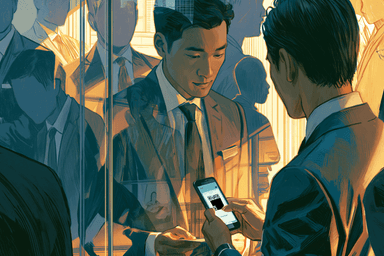
A senior professional once shared something interesting with me after using his digital business card at a networking session.
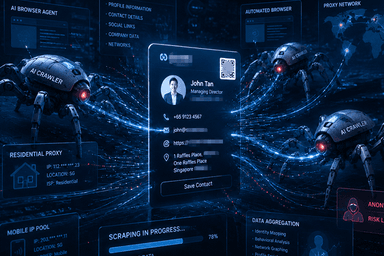
He told me that while some people scanned the QR code immediately, others hesitated. A few even admitted they were worried it could lead to a scam or phishing site.
It was an honest reaction, and to be fair, probably not an unreasonable one either.
That conversation stayed with me because it highlighted something bigger than digital business cards themselves. It raised questions about trust, technology, and how differently people experience the digital world today.
QR Codes Are Familiar, But Trust Still Matters
QR codes are everywhere now.
We use them to make payments, order food, register for events, access menus, and log into services. Most people encounter them almost daily without thinking twice.
At the same time, reports of scams and phishing attempts have also become more common. People are constantly reminded to be careful online, avoid suspicious links, and think twice before scanning unfamiliar codes.
So when someone hesitates before scanning a digital business card, it does not always mean they reject the idea of digital networking. Sometimes it simply means they are trying to be cautious.
In many ways, smartphones have become extensions of our personal and professional lives. They contain conversations, banking apps, company emails, private photos, and access to important accounts. People naturally become protective of something that holds so much of their daily life.
That caution is part of modern digital behaviour now.
Not Everyone Experiences Technology the Same Way
One thing I have learned from speaking to different users is that technology adoption is rarely as simple as age.
It is easy to assume older individuals are less comfortable with digital tools, but reality is often more nuanced.
Some retirees are highly confident using mobile banking, QR payments, and online services every day. At the same time, there are younger professionals who are extremely cautious online because they are more aware of cybersecurity risks.
The bigger difference often comes down to exposure and necessity.
Someone who regularly attends business events, meets new clients, or works in sales may already be comfortable exchanging details digitally. Others who no longer network actively, or who rarely need new business contacts, may naturally approach these interactions more carefully.
Neither response is necessarily wrong. People engage with technology based on their own experiences, habits, and level of comfort.
The Situation Changes Everything
I have also noticed that people react very differently depending on how the digital business card is shared.
When it is exchanged naturally during a face-to-face conversation, after a proper introduction or meaningful discussion, people usually feel more comfortable scanning it.
But if the same QR code appears in a random message, mass outreach, or unfamiliar online setting, hesitation increases immediately.
That says a lot about human behaviour.
Most people are not only judging the technology itself. They are also reading the situation, the environment, and the person standing in front of them.
A digital business card may be digital, but trust is still built through human interaction.
Digital Literacy Is More Complex Than People Think
Conversations around technology often become too simplified.
Sometimes caution is mistaken for a lack of digital knowledge, when in reality it can come from awareness and experience.
There are people who avoid scanning unfamiliar QR codes because they understand how scams operate. There are also people who scan almost everything without considering the risks.
Digital literacy is not only about knowing how to use technology. It is also about understanding when to trust something, when to question it, and how to make sensible decisions online.
That balance matters more today than ever before.
A Digital Business Card Was Always About Convenience
At its core, the purpose of a digital business card is fairly practical.
It exists to make sharing contact information simpler and more convenient.
Instead of carrying stacks of printed cards or updating details every time information changes, users can share:
- contact numbers,
- websites,
- social profiles,
- portfolios,
- company details,
- and other relevant information instantly.
For many professionals, it reduces friction and saves time.
But convenience alone does not create trust.
No technology can fully replace professionalism, credibility, or genuine human connection. Those things still come from the interaction itself.
Sometimes People Are Not Distrusting the QR Code
One of the more interesting things I realised after hearing different experiences is that hesitation is not always directed at the digital business card itself.
Sometimes people are simply unsure about the interaction.
Even with traditional paper cards, people still decide:
- whether they trust the person,
- whether they want future contact,
- whether they see value in the connection,
- or whether they will keep the card at all.
Digital tools did not remove those human decisions. They simply changed the format through which introductions happen.
In many situations, trust is still built by the person presenting the card, not the card itself.
Technology Is Already Part of Modern Business Life
Whether we realise it or not, most professionals already depend heavily on digital systems every day.
We use smartphones for communication, banking, navigation, authentication, meetings, and work. Businesses rely on cloud platforms, online payments, remote collaboration, and digital records to operate efficiently.
Completely avoiding technology is unrealistic for most people today.
The more practical challenge is learning how to use digital tools responsibly while understanding the risks that come with them.
That applies not only to digital business cards, but to modern professional life as a whole.
Final Thoughts
The more conversations I have with users and professionals, the more I realise that digital business cards are not purely about technology.
They are also about trust, confidence, communication, and human behaviour.
A QR code alone does not create trust, just as a printed business card never guaranteed credibility.
At the end of the day, networking is still deeply human. Technology simply changes how people begin the conversation.