At first, it did not feel like hacking.
It felt like a strange morning.
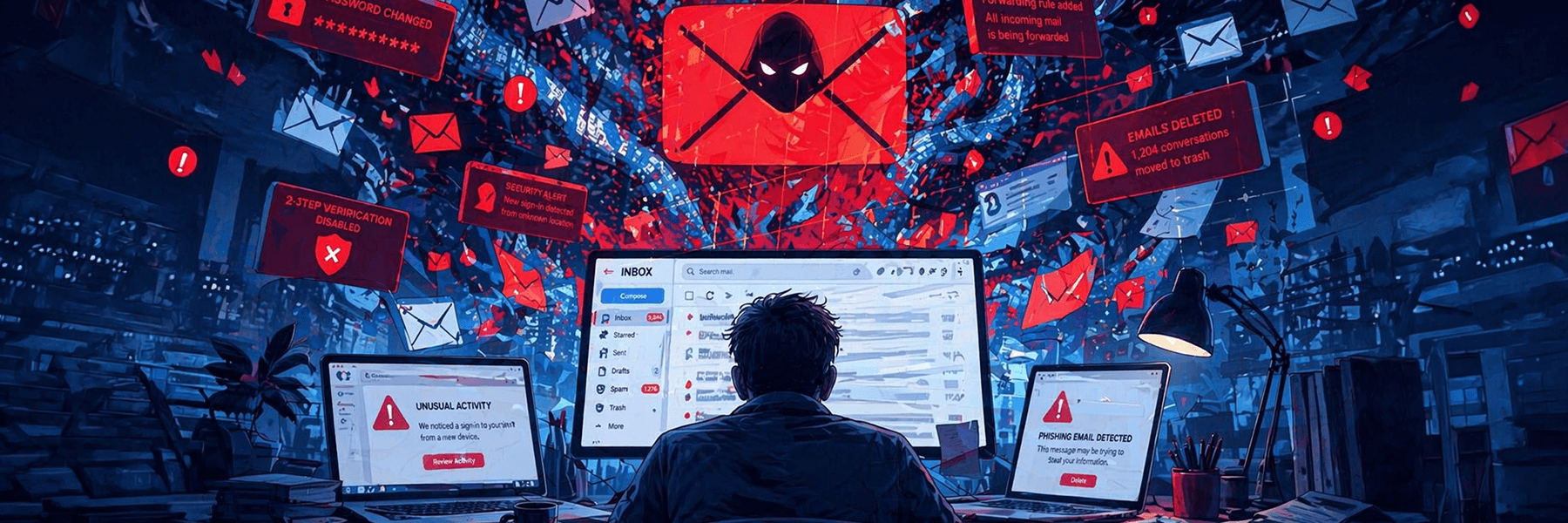
He opened his inbox and noticed three things almost at once. A password reset email he never requested. A reply from a colleague thanking him for a file he had not sent. And a login alert from a city he had never visited.
That was the moment his stomach dropped.
He refreshed the inbox. More messages appeared. One client asking whether the invoice was real. Another contact saying the attachment looked suspicious. He checked the “Sent” folder and saw emails he had never written.
Now it was no longer a strange morning.
It was an active compromise.
And this is what makes email hacking so unsettling. It often starts quietly. No dramatic warning. No flashing red screen. Just a few small signs that something is wrong, until the full picture begins to emerge.
Email attacks today are part of a wider digital threat landscape shaped by scams, misleading links, data breaches, and platform manipulation. That is why a hacked email account should never be treated as a minor inconvenience. It can quickly become a gateway to much bigger problems.
Why a Hacked Email Account Is More Serious Than It Looks
Most people think of email as a communication tool. But in practice, it is much more than that.
Your email is often connected to:
- banking alerts
- password resets
- social media accounts
- work systems
- cloud storage
- online shopping
- legal and financial records
In many cases, control of the email account means potential access to everything attached to it.
That is why attackers target inboxes. They are not just looking for messages. They are looking for leverage.
This broader pattern fits with ongoing concerns around cybersecurity, scams, data defense, and deceptive digital behavior.
How Email Hacking Usually Happens
Despite the word “hacking,” many email compromises do not begin with advanced technical attacks. They often start with ordinary mistakes exploited at the right time.
Phishing
A user receives what appears to be a legitimate email and enters login details into a fake website.
Reused Passwords
A password exposed in one breach is used to access email on another platform.
Malicious Links
A misleading or shortened link leads the user to a harmful destination or fake login page, a tactic that has become increasingly relevant in cybersecurity conversations.
Malware
A file, app, or browser infection captures keystrokes or session data.
Social Engineering
The attacker manipulates trust, urgency, or authority to gain access.
In simple terms, many email hacks happen because the attacker gets the user to open the door.
The Signs You Should Never Ignore
A compromised email account often leaves clues before the situation gets worse.
Watch for:
- password reset requests you did not make
- login alerts from unknown devices or locations
- contacts saying they received unusual emails from you
- sent messages you do not recognize
- missing emails
- forwarding rules you did not create
- changes to your recovery email or phone number
- security notifications you did not trigger
One sign may be accidental. Several signs together should be treated as a warning.
What to Expect After an Email Hack
This is the part many people are not prepared for.
A hacked email account can trigger consequences far beyond the inbox itself.
You may experience:
- loss of access to your own account
- fake emails sent to clients, colleagues, friends, or family
- password reset attempts on other accounts
- exposure of private or business information
- reputational damage
- financial risk
- confusion and emotional stress
For businesses, the risks can expand further into fraud, client mistrust, and internal disruption. Cybersecurity issues today are closely tied to trust, systems, and resilience — not just technology.
The First Rule: Do Not Panic
This may sound simple, but it matters.
When people panic, they click too fast, miss details, and make poor decisions. They may change one password and assume the problem is solved. They may forget to check forwarding rules. They may fail to warn their contacts. They may lose evidence that would help later.
A calm response is not a weak response. It is usually the strongest one.
Take a breath. Then act in order.
The SOP: What To Do Immediately
Here is a practical standard operating procedure for responding to a hacked email account.
1. Change the Password Immediately
If you still have access, reset your password right away. Make it strong, unique, and different from every other password you use.
2. Enable Two-Factor Authentication
If two-factor authentication is not already active, turn it on immediately. This creates an extra barrier even if someone has your password.
3. Review Recovery Details
Check your recovery email address, phone number, and account security settings. Remove anything unfamiliar.
4. Sign Out of Other Sessions
Many email providers let you review active devices or sessions. Log out of all unknown devices.
5. Check Inbox Rules and Forwarding Settings
This step is often missed. Some attackers create hidden forwarding rules so they continue receiving copies of your emails even after your password changes.
6. Scan Your Devices
Use trusted security software to check for malware or spyware. If the original compromise came from an infected device, changing the password alone may not be enough.
7. Secure Connected Accounts
Review all important accounts linked to the email:
- banking
- social media
- cloud platforms
- work tools
- shopping accounts
8. Warn Your Contacts
Let people know your account may have sent suspicious emails. This helps stop further damage.
9. Save Evidence
Take screenshots. Record timestamps. Save suspicious messages if possible. Documentation matters.
10. Report the Incident
If this affects work, report it to IT or security teams immediately. If financial fraud is involved, contact your bank or payment provider as well.
What Businesses Should Do Differently
For organisations, email compromise is not just a personal problem. It is an operational one.
A business response should include:
- immediate internal escalation
- password resets and account containment
- review of email logs and access history
- assessment of exposed data
- communication with affected clients or partners
- preservation of evidence
- internal review of gaps in process and training
Strong systems and frameworks matter here, especially when trust and accountability are involved.
How to Stay Calm and Vigilant at the Same Time
People often think calmness and vigilance are opposites. They are not.
Calmness helps you think. Vigilance helps you notice.
You need both.
Here are a few practical ways to manage your response:
- follow a checklist instead of guessing
- verify every step
- ask for help if needed
- focus on containment first
- do not let embarrassment delay action
- treat the event as a lesson, not a personal collapse
Long-term resilience often comes from disciplined thinking, clear systems, and steady decision making under pressure.
The Real Lesson After the Hack
Once the immediate crisis passes, there is a bigger question to ask:
What made the account vulnerable in the first place?
Maybe it was a reused password. Maybe it was a rushed click. Maybe it was a lack of two-factor authentication. Maybe it was overconfidence.
The point is not shame. The point is adjustment.
Cybersecurity is not about becoming fearful of everything digital. It is about becoming harder to deceive.
That means:
- using a password manager
- keeping software updated
- checking links carefully
- questioning urgency
- reviewing account activity regularly
- training teams and families to spot phishing attempts
As digital platforms become more complex and deceptive tactics become more polished, awareness becomes part of everyday self-protection.
Final Thoughts
A hacked email account can feel deeply personal because email is deeply personal. It holds conversations, records, access points, and often your first line of digital trust.
That is why the aftermath can feel overwhelming.
But the right response is not panic. It is clarity.
If you know the warning signs, understand what to expect, and follow a simple SOP, you give yourself the best chance of limiting damage and regaining control. And if there is one thing worth remembering, it is this:
The moment you notice something is wrong, slow down and start acting with purpose.